
Work
Growth outcomes for built environment brands.
Furniture
Lighting
Textiles/Upholstery
Flooring/Carpet
Building Materials
Building Systems
AE Firms
Dealers
Insights
Strategic thinking for built environment leaders.
BE Growth Index
Webinars
Frameworks and tools
Podcast
All articles

The Flipped Showroom
The Flipped Showroom
Why your most expensive real estate needs a new job.
By Kevin Budelmann | May 12, 2026
Your showroom was built when physical space was the only way to see your products. Now specifiers arrive already informed: They’ve scrolled your Instagram, used your configurator, and downloaded specs. The showroom’s job isn’t to display anymore; it’s to contextualize, customize, and close. Technology changed what visitors need from physical space. Your showroom strategy should catch up.

In a few short weeks, NeoCon, Design Days, or Chicago Design Week (if you prefer) will be upon us. Walk the streets at Fulton Market or the floors in the Mart, and you’ll see more than $50 million in showroom real estate doing a job it wasn’t designed for.
Even with showrooms moving around, the model hasn’t changed much in decades: pack the space with product, light it well, staff it with people who know the catalog. Success was a comprehensive showcase, a 3D catalog. If specifiers needed to see it, it was on the floor.
That made sense when the showroom was the only place to experience finish options, scale relationships, and material quality. Physical presence was the information bottleneck, but not anymore. Today, from buying books to banking, technology has changed our relationship with physical spaces.
Today’s specifier arrives at your showroom having already toured it digitally. If you’re doing it right, they’ve scrolled your Instagram, used your configurator, and downloaded your cut sheets. Unless you’re holding out for a big reveal, they’ve already seen your product. They are not there for introduction; they’re there for validation.
Your showroom might be designed to solve the wrong problem.
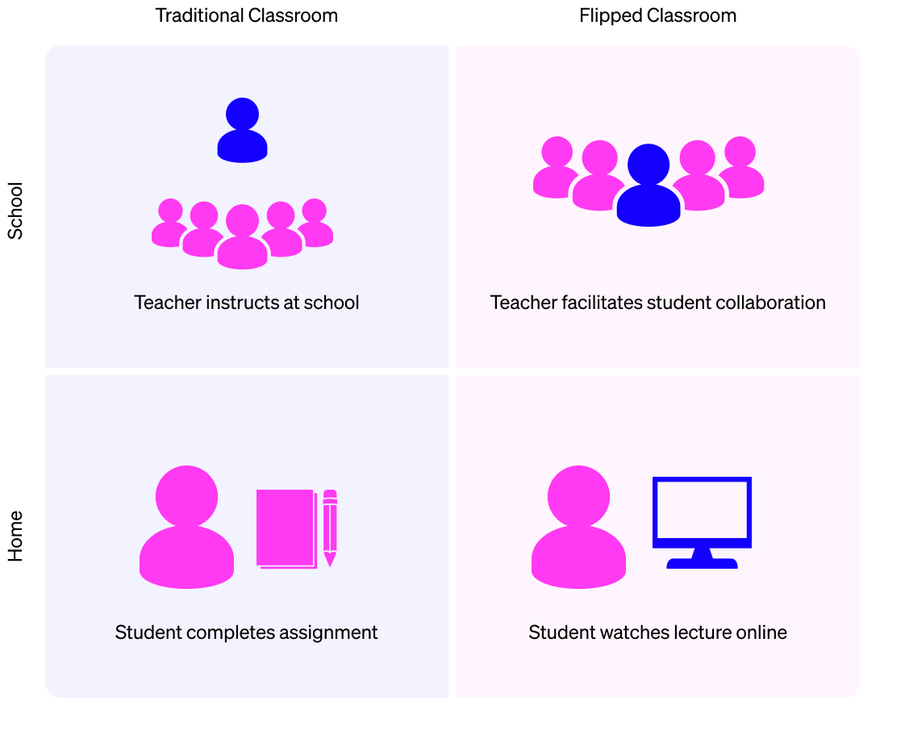
The Flipped Classroom
Education figured this out fifteen years ago with the flipped classroom model. In a traditional classroom approach, teachers lecture in class, and students complete problem sets at home. In the flipped approach, students watch lectures at home, and class time is for application and problem-solving. Information delivery has moved outside, while application and collaboration move inside.
The inversion works because it matches the tool to the task. Video is efficient for some kinds of information delivery, but human interaction is helpful for navigating complexity, troubleshooting obstacles, and building confidence in decisions. Technology enabled remote lectures, so they don’t need a classroom. Perhaps learning does.
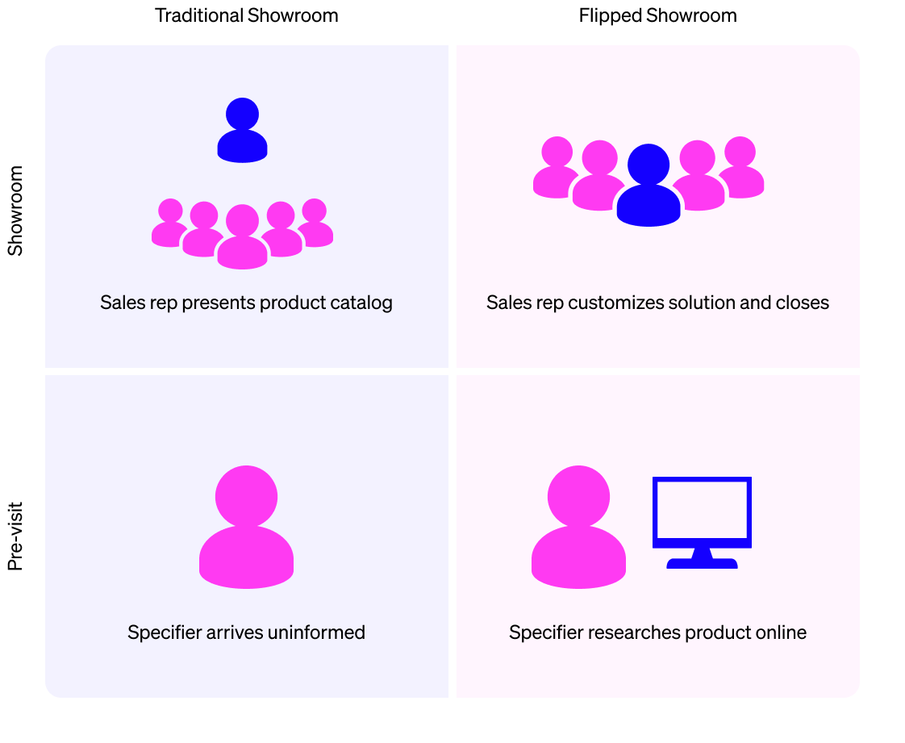
The Flipped Showroom
Yesterday, a scarcity of information required physical aggregation. But what is a showroom for when product information no longer needs a building? What can we learn from the flipped classroom?
Product details no longer need a showroom, but decision support does. The showroom’s job isn’t to display, it’s to contextualize, customize, and close.
Contextualize: Focus on what you can’t judge on a screen, like material adjacencies in real lighting or scale relationships. Consider the sensory gap between specification and installation. What physical context can you create in real life that you can’t get online?
Customize: Maps your product to a specific project challenge. Rather than “here’s what we make,” design the space and sales scripts to illustrate “here’s how we solve your problem.” This begs important strategic questions, like: What customer problems do products and brands actually solve?
Close: Don’t assume you’re starting at step one. How might your showroom script surface and resolve objections in real time? You want the specifier to leave, having moved from interested to committed.
People still want physical interactions, so it isn’t about fewer showrooms. It’s about a different showroom.
Many competitors have experimented with showroom approaches that aren’t just product galleries, but tradeshow chaos often clouds other strategies. Planning studios and prototype labs might work better by appointment than large crowds shuffling through your space, but treat a tradeshow for what it is – an experience. Contextual vignettes and museum-like experiences will not only acknowledge how technology has shaped our expectations but will also make your brand more memorable.
Assume the visitor did at least some of their homework, if not before the show, just before they walk in the door, or perhaps even in real-time while inside. The showroom completes what digital started.

What This Means for Tradeshows
Tradeshows are about showing up, creating new stories for salespeople to tell, and making personal connections. But it’s different today.
Three questions for your showroom strategy:
What do visitors already know before they arrive? If they’ve toured your site, used your tools, and followed your content. Aside from showing them yet another chair or table, what’s left for the physical space to do? What can only happen in person?
What can they experience, feel, see, or take away that they can’t get on a screen? Complexity that requires conversation. Materiality that needs to be touched. Relationship depth that doesn’t happen over email.
Are you optimized for browsing or deciding? If your floor plan assumes discovery, but your visitor is three steps past that, you’re wasting their time and your square footage. Your 3D catalog is harder to navigate than your website (we hope).
The manufacturers who win aren’t the ones with the biggest displays. They’re the ones who’ve figured out what a showroom is for when product information is everywhere. Pixels won’t replace atoms, but your showroom needs to be more than an expensive billboard.
Technology changed the script, so your showroom needs a new job.

Work
Growth outcomes for built environment brands.
Furniture
Lighting
Textiles/Upholstery
Flooring/Carpet
Building Materials
Building Systems
AE Firms
Dealers
Insights
Strategic thinking for built environment leaders.
BE Growth Index
Webinars
Frameworks and tools
Podcast
All articles
