
Work
Growth outcomes for built environment brands.
Furniture
Lighting
Textiles/Upholstery
Flooring/Carpet
Building Materials
Building Systems
AE Firms
Dealers
Insights
Strategic thinking for built environment leaders.
BE Growth Index
Webinars
Frameworks and tools
Podcast
All articles

Name the Special Ingredient
Name the Special Ingredient
The built environment industry names things constantly, but most names don’t stick. Create a message strategy that communicates and compels.
By Kevin Budelmann | October 13, 2026
TL;DR: BE companies introduce names regularly, but rarely build them into strategic assets. Ingredient branding (naming a component to create preference at the specification level) is often overlooked. Winning examples share a common thread: a name backed by consistent investment, clear differentiation, and a story worth telling. Consider: Does the name make it easier to choose you, or does it just add to the noise?

Brands are rarely monoliths. They have parts—companies, products, technologies, materials, processes—each of which can carry its own meaning. Naming those parts is a good start, but building a name into a strategic asset is where most brands stop short.
The concept has a formal name: ingredient branding. It has been around for decades, brought into mainstream awareness by Intel’s 1991 “Intel Inside” campaign. The goal is to create awareness and preference for a component that customers don’t interact with directly. It elevates the value of the ingredient and, by extension, the product that contains it. Gore-Tex made waterproofing a key decision driver for outdoor apparel. NutraSweet made a sweetener into a consumer choice signal. Dolby made noise reduction a standard that manufacturers competed to include, not a feature they could afford to leave out.
The built environment industry has its own examples. Herman Miller named the suspension material in the Aeron’s back Pellicle. Steelcase named the flex mechanism in the Karman chair LiveBack. Haworth named the suspension system in the Fern chair Wave. KI introduced Cognetic Technology this year as part of its Kiaura seating collection. Each of these is a company naming something it invented, giving customers a handle for understanding why the product works differently, and giving the sales team a story worth telling.
The built environment industry is not short of named features. Many manufacturers have a proprietary mechanism, a material specification, and a performance attribute with a trademarked label. What is less common is the strategic infrastructure that makes those names do real work: consistent use across sales, marketing, and specification materials; a clear explanation of why the name corresponds to meaningful differentiation; and enough sustained investment to make the name recognizable before a rep has to explain it. A name without that infrastructure is a label, not a brand. The difference between Pellicle and a feature bullet on a spec sheet is not the name itself—it is the decision to treat the name as an asset worth building.
These OEM ingredient brands are proprietary technologies developed and named by the manufacturer. But the more underexplored opportunity sits upstream, with the suppliers and materials companies that provide the ingredients other manufacturers build into their products.
Textile providers often invest real resources in differentiated performance profiles—cleanability, flame retardance, antimicrobial characteristics, recycled content, bio-based composition—and then watch that investment disappear into the finished product without a name, without a story, and without the ability to drive preference at the specification level. A named, marketed performance attribute changes the dynamic. It gives designers something to specify by name. It gives dealers something to explain. It gives the manufacturer who buys it a reason to prefer your material over a generic alternative.
The same logic applies across the supply chain. Flooring has backing systems. Glass has interlayers and coatings. Seating has mechanisms, ergonomic controls, foams, and mesh materials. Lighting involves light sources, color quality, drivers, dimmers, optics, sensors, and circadian systems. Any of these, when genuinely differentiated and properly named, can become a value driver for both the supplier and the manufacturer who incorporates it.
Having too many names carries risk. The built environment already runs on alphabet soup: BIFMA, ACT, UL, FSC, Energy Star, LEED, WELL, Greenguard, EPDs, Declare. Third-party certifications fill a quasi-ingredient-brand role. Adding proprietary names to that stack without discipline can create noise, not signal. Covering a showroom wall with logos doesn’t build preference; it builds confusion. Features that don’t warrant a name sometimes get one anyway, and when customers learn that a name doesn’t correspond to meaningful differentiation, trust erodes, and they become skeptical of the next name.
Does naming this make it easier for a customer to choose you, or does it just make your materials more complicated? Know the difference. If the answer is the former, name it, invest in it, and market it consistently. Otherwise, resist the impulse. Names without meaning are just noise.
When deployed correctly, ingredient brands are more than names. They are thought leadership assets, specification tools, and consultative selling narratives. They give your category a shape that competitors have to respond to. Dolby didn’t just make its technology better; it made its technology the standard that others were measured against. That is a different kind of competitive advantage than product performance alone.
The built environment rewards specification, specification rewards familiarity, and familiarity begins with a name.
Naming a category is leading. The ingredient brands that don’t exist yet in this industry are waiting for someone to invent them, name them, and make them the things specifiers ask for by name.
Ingredient Branding in Practice
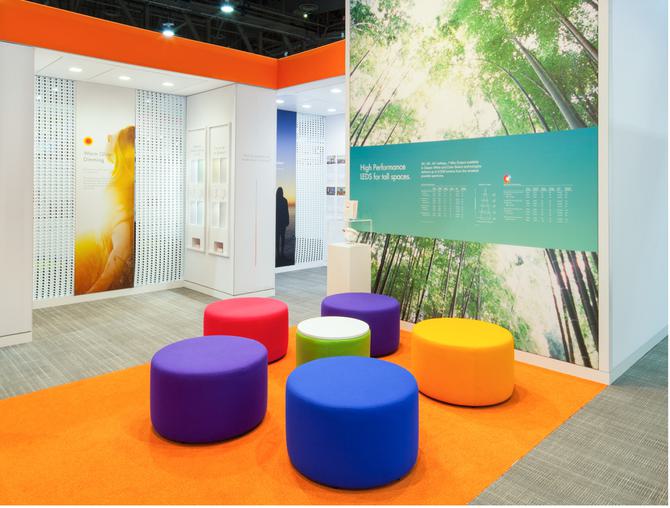
Here is an example of an ingredient brand approach for a LED technology company, USAI Lighting.


Work
Growth outcomes for built environment brands.
Furniture
Lighting
Textiles/Upholstery
Flooring/Carpet
Building Materials
Building Systems
AE Firms
Dealers
Insights
Strategic thinking for built environment leaders.
BE Growth Index
Webinars
Frameworks and tools
Podcast
All articles
