
Work
Growth outcomes for built environment brands.
Furniture
Lighting
Textiles/Upholstery
Flooring/Carpet
Building Materials
Building Systems
AE Firms
Dealers
Insights
Strategic thinking for built environment leaders.
BE Growth Index
Webinars
Frameworks and tools
Podcast
All articles

Brand Experience
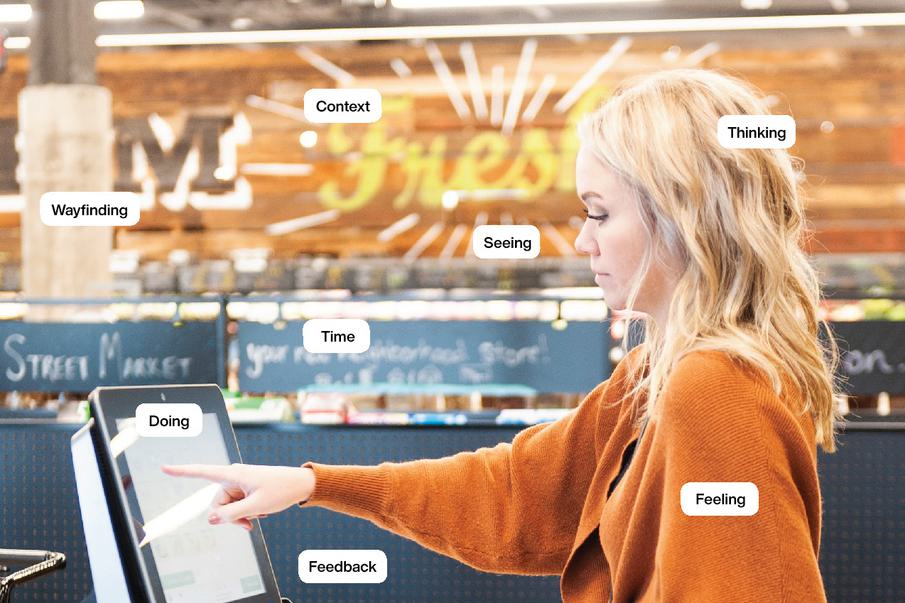
Every customer interaction is an opportunity to build the brand
The best brands translate well to a variety of customer interactions. Each time a customer encounters the brand is an opportunity to remind, inform, deliver, and delight. Large organizations with literally thousands of touchpoints require flexible programs with clear guidelines. A graphic identity can be applied to everything from paper cups to ocean liners. Smaller companies may not have as many requirements, but the same logic applies – even the smallest business has invoices and a website, and these touchpoints merit consideration.
Production constraints, brand standards, and a right-sized plan are worth an up-front investment to ensure each touchpoint expresses the brand as intended. It’s not only protecting an investment, but also the entry point through which people experience a brand.
Customer Experience Alignment
Each customer interaction or touchpoint either helps build, or erodes the perception goal. Each interaction should be designed to be mindful of others while also standing on its own as a memorable, effective experience.
Key Interactions
Mapping all customer touchpoints may seem overwhelming, but not all touchpoints are created equal. Depending on your position, certain key touchpoints – those that are critical for keeping brand promises– are important to identify at the outset.
Failure modes
Organizations often fail to view touchpoints as a linear progression from the customer’s perspective. Too many touchpoint activities are created to meet internal expectations, resulting in incongruent customer experiences.
The Customer’s Perspective
Building a brand as a series of interactions means seeing it through the customer’s eyes. Consider each interaction as they might see it, how one builds on another, and the cumulative effect.
Not all touchpoints are the same, nor do they have equal value. Some interactions occur almost simultaneously and therefore require greater continuity than those that occur separately. Some touchpoints occur regularly, which implies a kind of rhythm, while others are ad hoc, providing a little splash of surprise. Some touchpoints may go unnoticed by customers, while others directly influence their buying decisions.
Most importantly, remember that a customer’s experience with a brand is a linear experience through their perspective – not your department, or medium, or budget. Each interaction is a qualitative judgment. Their perception is shaped each time they interact with the brand.
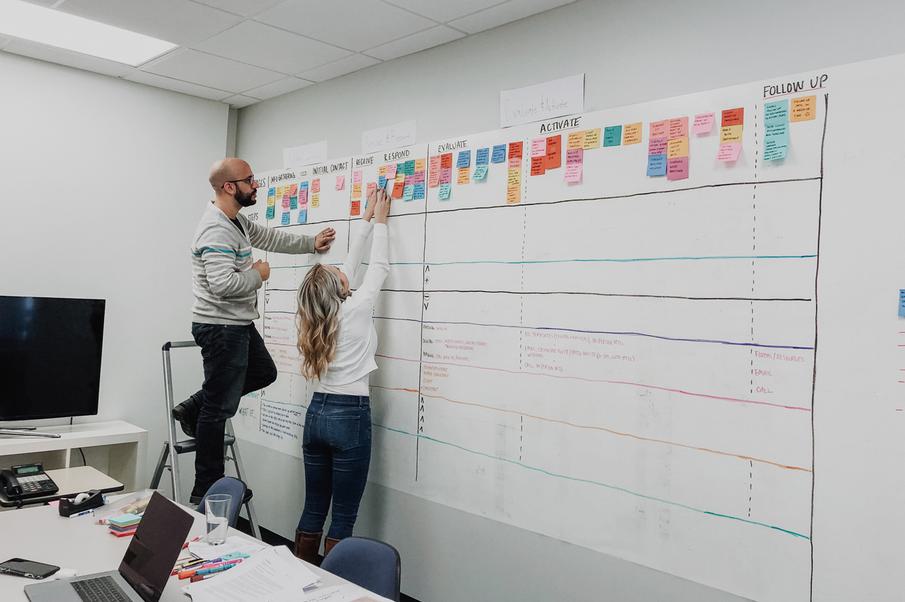
Planning customer experiences
Customer perceptions are created by a series of touchpoints – the interactions customers have with a brand. These touchpoints can, and should, be identified in a high-level customer experience plan. By mapping customer interactions, brand builders can better define the relationship between tactics.
Customer experience design is the discipline of understanding customer needs, making choices about an ideal customer experience path, and creating memorable customer touchpoints that affect customer perception or brand value.
Customer experience planning is a powerful brand-management tool. It provides a framework not only for answering key questions but also for realizing better outcomes. How do customers currently experience a brand? How would you like them to experience the brand? What happens before, during, or after? Changing, adding, or removing touchpoints can reshape the customer’s perception of your brand.
Touchpoint strategies that reflect customer needs and company positioning contribute to strong brands.

Work
Growth outcomes for built environment brands.
Furniture
Lighting
Textiles/Upholstery
Flooring/Carpet
Building Materials
Building Systems
AE Firms
Dealers
Insights
Strategic thinking for built environment leaders.
BE Growth Index
Webinars
Frameworks and tools
Podcast
All articles
